Summary
The Technical University of Munich (TUM) is seeking a full-time PostDoc to join an interdisciplinary team at the high flux Neutron Source Heinz Maier-Leibnitz (FRM II). The role is part of a national collaborative project focused on advancing research data management (RDM) in photon and neutron sciences (PaN) using modern AI and Large Language Models (LLMs). The successful candidate will work on automating metadata extraction, semantic enrichment, and code generation for neutron data analysis, integrating these tools into the software infrastructure of the Heinz Maier-Leibnitz Zentrum (MLZ).
PostDoc (m/f/d) – Large Language Models for Metadata Extraction and Scientific Data Infrastructures, University of Munich, Germany
Key Details
| Attribute | Details |
| Designation | PostDoc (m/f/d) |
| Research Area | Large Language Models (LLMs), Research Data Management (RDM), Natural Language Processing (NLP), Semantic Technologies |
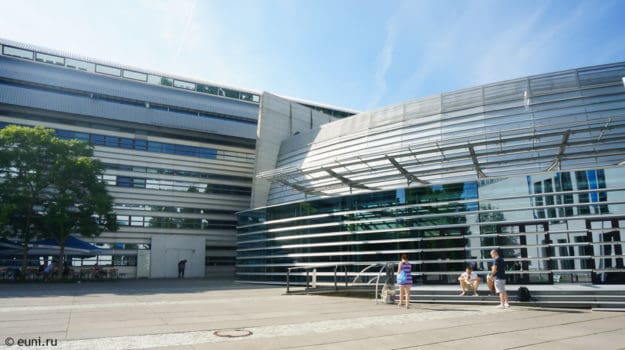
| Location | Scientific campus in Garching, Germany |
| Employment Type | Full-time (40 hours / week) |
| Duration | Initially limited to 3 years |
| Salary Scale | Based on the German pay scale TV-L |
Eligibility & Qualification
- Education: Completed PhD in physics, computer science, data science, or a related field.
- Technical Expertise: Strong expertise in machine learning / natural language processing (NLP), ideally with a focus on large language models.
- Frameworks: Proficiency with Python and modern ML frameworks (e.g., PyTorch, TensorFlow, Hugging Face).
- Desired Knowledge (Advantages):
- Experience with data formats and standards like HDF5 and NeXus.
- Experience with semantic technologies (ontologies, RDF, SPARQL, knowledge graphs).
- Soft Skills: Excellent command of written and spoken English, and the ability to work effectively within interdisciplinary teams.
- Legal Requirement: The high safety standards of the facility require a reliability check according to German nuclear law.
Job Description (Tasks and Responsibilities)
- Implement and integrate LLM-based methods for automated metadata extraction and ingestion into the FRM II / MLZ data infrastructure.
- Develop robust pipelines to extract, harmonize, and standardize metadata from heterogeneous sources (e.g., publications, HDF files).
- Adapt and optimize large language models tailored for scientific applications in neutron research.
- Contribute to the development and implementation of ontologies and knowledge graphs to semantically link experimental data.
- Build systems that translate natural language queries into structured data queries (e.g., SPARQL).
- Develop an LLM-based assistant system to support experiment planning and metadata capture.
- Participate in automated code generation for neutron data analysis.
- Collaborate closely with project partners (including Forschungszentrum Jülich, KIT, Hereon) and initiatives like DAPHNE4NFDI.
Perks & Benefits
- Access to TUM sports and health programs.
- TUM-internal training courses, including language courses and lifelong learning opportunities.
- TUM childcare services.
- Excellent connections to public transportation.
How to Apply
Interested candidates can apply directly online through the portal.
For further information regarding the position, you can contact:
- Contact Person: Mr. Michael Schulz
- Phone: +49 89 289 14718
- Email: Michael.Schulz@frm2.tum.de
To view the official posting or submit your application, please visit the TUM Jobportal.
Last Date for Apply
- August 13, 2026